Needle felting is not a quick craft. Every little curve, fold, feather, or fur texture takes time. When you set up at a show where people are hunting for five dollar items or mass produced decor, it can feel like your work is completely out of place.
- The wrong market can leave you with
- A lot of “I could make that” or “I saw something like that at Walmart for cheaper”
- People rushing past your table because they are not there for handmade work
That heavy feeling of wondering if your prices are wrong when really it is just the wrong audience
The right market, on the other hand, feels very different. You hear things like
- “I have never seen anything like this before”
- “I have been saving up to buy something special this year”
- “My grandma used to work with wool, this reminds me of her”
People linger. They ask questions. They run their fingers lightly over the wool. They come back with a friend. They tell you about the person they are buying for. Even if they do not buy, you can feel the respect. That matters.
Being selective is not about being snobby. It is about aligning your work with people who are ready for it.
When I hear about a potential show, I do not just think “Can I do it” and look at my calendar. I ask “Is this the right place for needle felts.”
Some things I pay attention to
- Is it juried or do you have to apply
Juried shows or application based events usually care about quality and balance of vendors. Someone is looking at your work and deciding where it fits. That is a good sign.
- How often does it happen
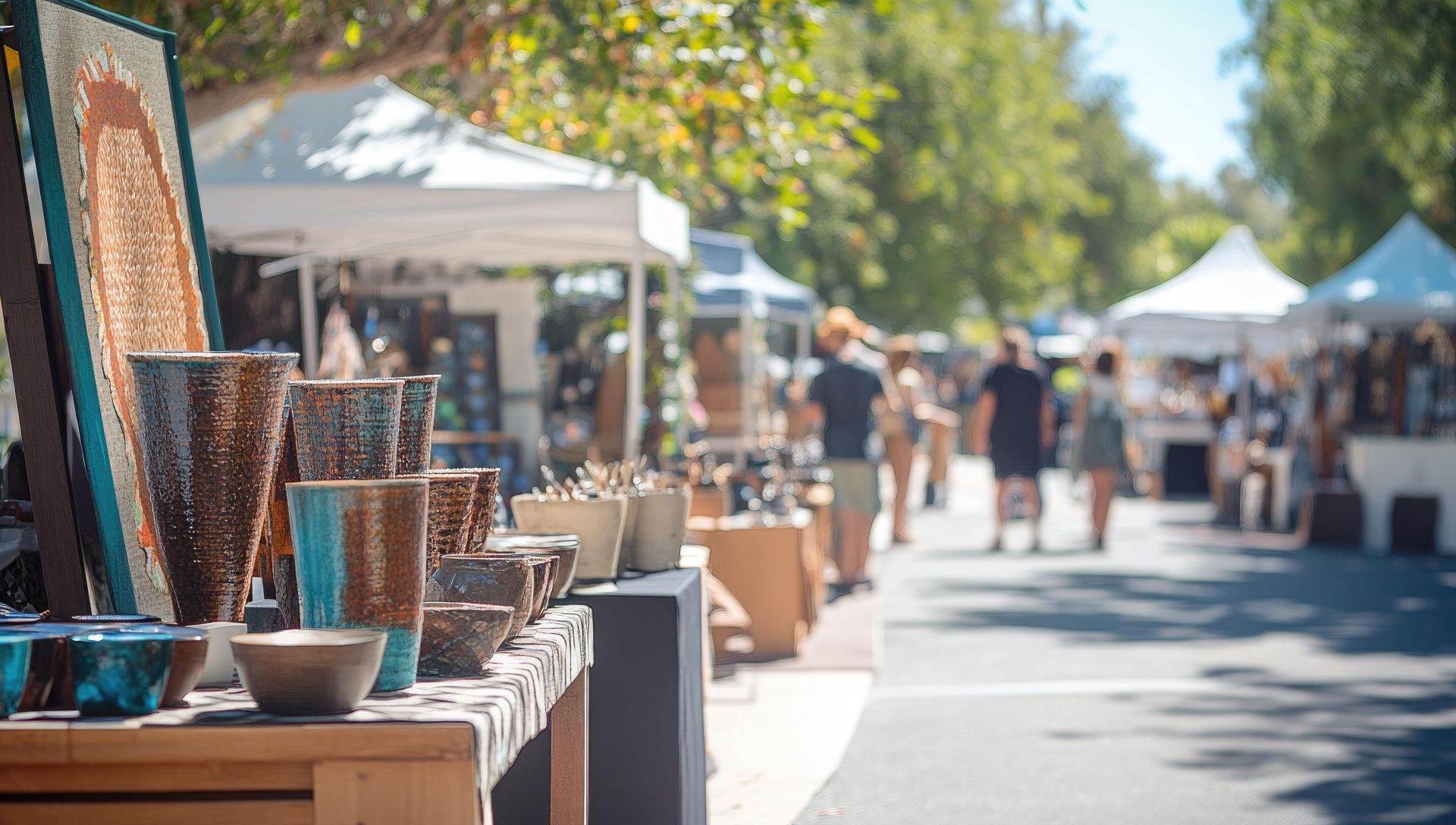
I tend to avoid the weekly markets that run all summer unless they are clearly focused on handmade work. I look for events that people anticipate. Once or twice a year. A holiday market that is on everyone’s calendar. Those shows attract shoppers who have set money aside and are coming to find something special.
- Who is hosting it
A gallery, art center, or established organization that cares about the arts often curates thoughtfully. A random “craft show in a parking lot” with little information tends to be more hit or miss.
- Who else is there
I look at the vendor list if they share it. Are there other artists and makers with higher end work. Jewelry, pottery, fiber art, woodwork. That tells me customers are used to seeing real handmade pricing.
I do a little detective work before I ever send in a payment.
Here is my basic process:
- Search the event online
I look for the website or Facebook event. Are there photos from previous years. What do the booths and displays look like. Are there tables full of wholesale trinkets or mostly handmade items.
- Look at past vendors
Many events tag vendors on social media. I click through to see what they make, how they present their work, and how they talk about the show afterward.
- Read comments and reviews
I pay attention to comments like “We save up to shop this market every year” or “Great selection of handmade gifts.” That is what I want. If I see a lot of “Too crowded, not enough parking” I can live with that. If I see “Mostly cheap stuff and resale items” I pause.
- Check the price range
If every booth is advertising five and ten dollar items and “bargain deals” it might not be the right fit for original needle felt work that takes hours. If I see higher price points being celebrated, that is encouraging.
- Ask other makers
When I can, I ask fellow artists if they have done the show. Makers are usually very honest. If they say things like “People really appreciate handmade there” or “It is one of my favorite markets of the year” I pay attention.
This might sound like a lot, but once you do it a few times it becomes second nature. You start to get a feel for which events are worth packing the car for.
Sometimes the answer really should be no, even if you are flattered to be invited.
I get cautious when:
- The event seems unclear about whether it is handmade, resale, or a mix
- The organizer cannot answer basic questions about past attendance or vendor types
- The main advertising is “cheap gifts” or “bargain shopping”
- Booth fees are high but there is very little promotion or online presence
- The photos from previous years show mostly mass produced items
None of this makes a show “bad.” It just might not be the right match for fine detailed needle felting that is priced for the time and skill it takes.
You are allowed to say no. You are allowed to wait for the ones that make sense.
Once I decide a market is a good fit, then the fun begins. Preparing well can make a huge difference in how confident you feel the day of the show.
1. Plan your collection
I like to think in terms of a tiny gallery space. What story do I want my table to tell.
You might include
- Statement pieces
Larger or more complex works that show the depth of your skill. These might not be the first to sell, but they draw people in and start conversations.
- Mid range pieces
Animals, birds, or sculptures that are detailed and special but still within a comfortable gift budget for many shoppers.
- Smaller accessible items
Ornaments, tiny creatures, pins, or other small works that let people take home a piece of your work without a huge commitment. These can help balance out the day financially.
Think about variety without overwhelming yourself. You do not have to bring everything you have ever made. Curate.
Markets will test your confidence in your pricing faster than almost anything else.
Some reminders I carry with me
- Your prices are not random. They are connected to your time, your years of practice, and your materials.
- The right customers will understand that, especially in a well chosen market.
- It is better to sell fewer pieces at the right price than go home exhausted and underpaid.
You can quietly have a range, but do not feel pressure to slash your prices mid show if someone makes a comment. Those comments usually say more about their expectations than your work.
3. Display that tells a story
- Needle felts are very tactile. People want to see the details.
Some simple display ideas
- Vary height so everything is not flat on the table
- Use natural textures that match the feel of wool
- Clearly label prices so people do not feel awkward asking
- Add a small sign sharing who you are and what needle felting is
You do not need a huge elaborate display. Just something that feels like you and gives your work breathing room.
The unglamorous list that makes the day smoother
- Square or another way to take cards
- Cash box with change
- Business cards or small cards with your website and email
- Simple packaging so people can carry items safely home
- A notebook to jot down custom requests or ideas people mention
- Snacks, water, and an extra layer because venues are never the temperature you expect
- Taking care of yourself physically helps you stay present and kind, even when you get tired.
The way you show up matters as much as your display.
- At the show I try to
- Look up often and smile
- Greet people even if they only glance for a moment
- Invite conversation with simple things like “Do you work with fiber at all” or “Have you seen needle felting before”
- Share a tiny bit about a piece if someone lingers
You do not have to be salesy. Mostly people want to feel comfortable and not pressured. Giving them a warm, calm space to look and ask questions is more than enough.
And if someone says “I could never do this” I usually smile and say something like “It looks intimidating, but it is very relaxing once you get into it.”
Choosing the right markets and preparing with intention changes everything.
The right show gives you:
- More yes moments than no moments
- Fewer draining comments and more genuine connection
- Customers who come back year after year and look for your table
- Confidence to keep creating your best work instead of shrinking it to fit a bargain crowd
It also shifts the way you see yourself. When you stand in a room full of serious makers and realize “I belong here” it settles something inside.
You start to understand that being selective is not you being difficult. It is you honoring the work you do and the years it took to become this skilled. It is you trusting that there are people who will appreciate what you make and are willing to pay for the time and care it takes.
If you are new to markets, it is okay if you do not get it perfect right away. You might do a show that feels a little off. That is information, not failure.
After each market you can ask yourself
- What felt good
- What felt draining
- Which comments stuck with me in a good way
- Were people there to browse or to buy
- Do I want to do this show again next year
Little by little you build your own list of “yes” markets and your own understanding of where your work fits best.
You and your needle felts deserve to be in spaces where people light up when they see them. Where they lean in closer, call their friend over, and say “Look at this one.” Where your prices are met with understanding, not shock. Where you drive home tired but happy, not questioning everything.
Those markets are out there. They may take a little research and patience, but they are worth waiting for.
Christie